
What Do Your Moles Really Mean?
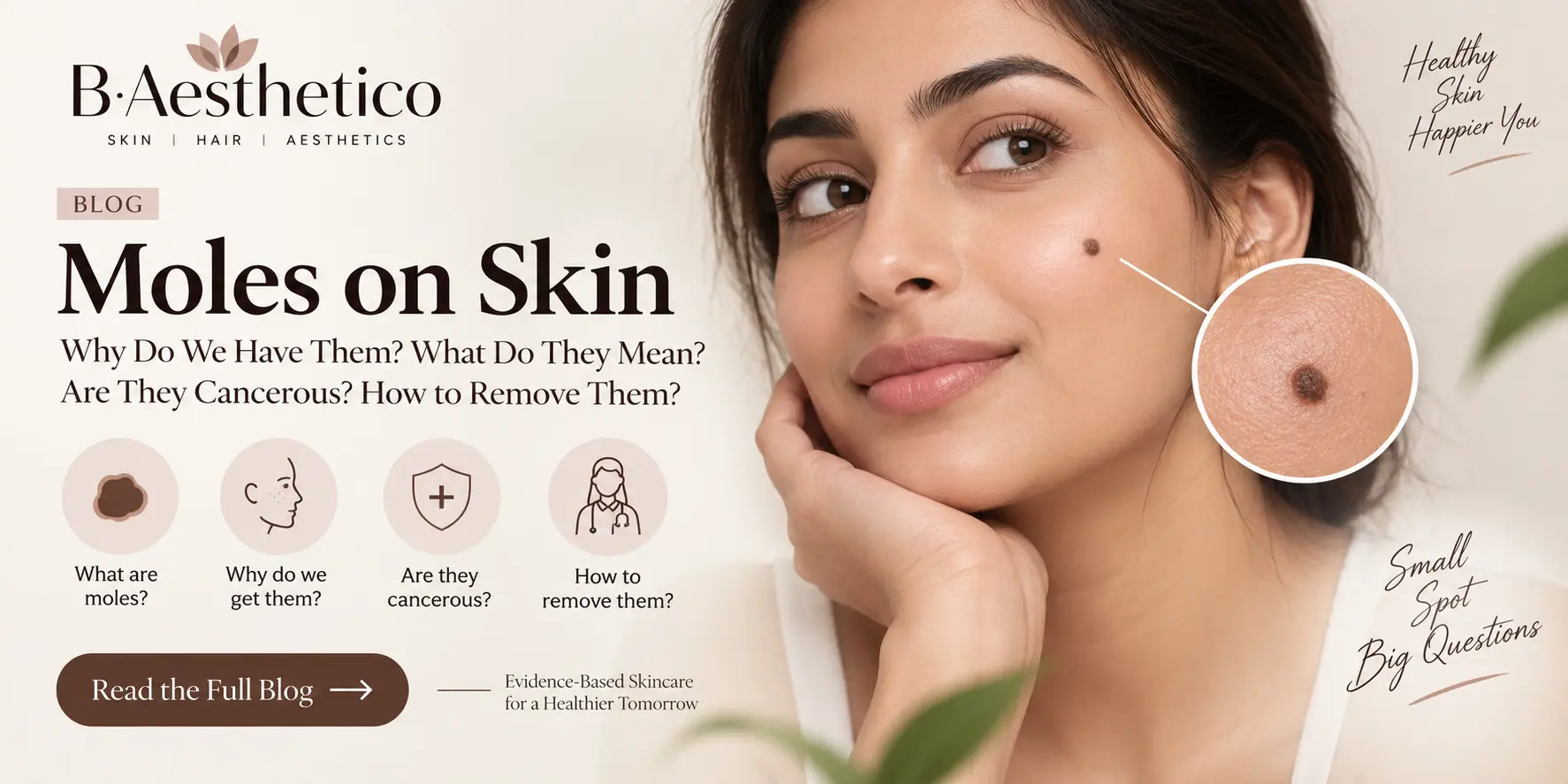
Have you ever looked at a mole on your face or body and wondered, “Why do I have this mole?”, “Is this mole normal?”, or even “Can a mole be dangerous?”
Moles are extremely common. Most are harmless and are simply a result of clusters of pigment-producing cells called melanocytes. Medically, a mole is called a nevus, while multiple moles are called nevi.
But because some skin cancers, particularly melanoma, can look like a changing mole, knowing what to watch for is important.
What Is a Mole?
A mole is a small area of skin where melanocytes grow together in a cluster.
A typical common mole is usually:
- Round or oval
- Pink, tan, brown or darker
- Relatively small
- Smooth or slightly raised
- Clearly defined from the surrounding skin
Most people develop moles during childhood and adolescence, and new moles can continue appearing into adulthood. Some people naturally have only a few moles, while others have dozens.
Why Do We Have Moles?
There isn't one single reason why a person develops moles. Genetics, age and sun exposure can all influence the number and appearance of moles.
Your genes can make you more likely to develop multiple moles. Sun exposure and ultraviolet (UV) radiation can also influence melanocyte activity and contribute to changes in pigmented skin.
This is one reason why daily sun protection matters even when your main concern isn't tanning or pigmentation.
If you're interested in how UV exposure affects skin, read our guides on What Really Is SPF? and Why Am I Still Tanning Even Though I Use Sunscreen?.
What Do Moles Mean?
From a medical perspective, a normal mole usually doesn't have a special meaning about your health or personality.
You may have heard traditional beliefs about the meaning of moles depending on where they appear on the face or body. These interpretations are cultural or astrological rather than medically established.
From a dermatology perspective, what matters is the appearance and behaviour of the mole. A stable, symmetrical mole that has looked the same for years is generally less concerning than a mole that suddenly changes.
Can Moles Be Cancerous?
Most moles are not cancerous.
However, some types of unusual moles, particularly dysplastic or atypical nevi, are associated with an increased risk of melanoma. Having many moles can also be a risk factor for melanoma.
Importantly, not every changing mole is melanoma, and not every melanoma looks like a typical mole. Melanoma can also develop on skin that previously looked completely normal.
That's why the goal isn't to panic about every mole. The goal is to recognise unusual or changing skin lesions early.
How to Tell If a Mole Could Be Concerning
One of the easiest ways to remember potential warning signs is the ABCDE rule for melanoma.
A - Asymmetry
One half of the mole doesn't look like the other half.
B - Border
The edges look irregular, jagged, blurred or poorly defined.
C - Colour
The mole contains several colours or develops a noticeable change in colour.
D - Diameter
A mole becomes larger, particularly when it is growing beyond approximately 6 mm.
E - Evolving
This is one of the most important signs.
The mole is changing in size, shape, colour, texture or elevation.
Dermatology resources also use the concept of an “ugly duckling”, a mole that looks noticeably different from all the others on your skin.
Other changes worth getting assessed include:
- Bleeding
- Crusting
- Persistent itching
- Oozing
- Becoming hard or lumpy
- Rapid growth
- A new unusual pigmented spot
Does Every Suspicious Mole Mean Cancer?
Ofcourse not.
Many skin lesions that look unusual turn out to be completely benign. A dermatologist may use dermoscopy, a specialised examination of the skin, to look more closely at a mole.
If a lesion remains suspicious, a biopsy or complete removal may be recommended so the tissue can be examined under a microscope. Histopathology is what can confirm whether melanoma or another skin cancer is present.
So, you cannot reliably diagnose skin cancer just by looking at a mole yourself.
Can Moles Be Removed?
Yes. A mole can be removed for several reasons:
- Cosmetic concerns
- Repeated irritation from clothing, jewellery or shaving
- The mole is bothersome
- The mole appears suspicious and needs to be examined
Common medical approaches include surgical excision and shave removal, depending on the type, location and appearance of the mole.
The right technique depends on the individual lesion.
Never Try to Remove a Mole at Home
Cutting, burning, scratching or using unverified “mole removal” products at home can cause:
- Scarring
- Infection
- Skin damage
- Incomplete removal
- Delayed diagnosis of skin cancer
If a mole could potentially be melanoma, removing it without proper assessment can make diagnosis more difficult. The American Academy of Dermatology specifically advises against trying to remove moles yourself.
Can Skincare Products Remove Moles?
Not at all. Regular skincare products are not designed to remove melanocytic moles.
Products containing ingredients used for pigmentation or uneven skin tone may help with dark spots, tanning or pigmentation, but that is different from removing a mole.
For example, if your concern is pigmentation rather than a true mole, our Pigmentation: Causes, Effects on Skin & Best Treatment for Clear Skin explains the difference and discusses skincare approaches.
For daily UV protection, explore B-Aesthetico Skin Saver SPF 50+++ and learn more about why consistent sun protection matters in our SPF guide.
Effects of Sun Exposure on Moles
UV radiation is an important risk factor for melanoma and other skin cancers.
This doesn't mean that every mole exposed to sunlight will become cancerous. It means that protecting your skin from excessive UV exposure is an important part of long-term skin health.
Use broad-spectrum sunscreen, seek shade when appropriate, wear protective clothing and avoid unnecessary prolonged sun exposure.
Our Ultimate De-Tanning Guide also explains why protecting your skin from UV exposure is important when dealing with tanning and uneven pigmentation.
When Should You Get a Mole Checked?
Consider getting a mole professionally assessed if it:
Changes in size, shape or colour, becomes asymmetrical, develops an irregular border, starts bleeding or crusting, becomes persistently itchy or painful, grows rapidly, or looks significantly different from your other moles.
A new unusual pigmented lesion in adulthood can also warrant evaluation. The important thing is not to diagnose yourself from a photograph or a Google search.
Frequently Asked Questions
Are moles normal?
Yes. Most moles are benign collections of melanocytes and are completely normal.
Why do some people have more moles than others?
Genetics, age and environmental factors such as sun exposure can influence how many moles a person develops.
Can a normal mole become cancerous?
It is possible but uncommon. Most common moles do not become melanoma, and many melanomas develop independently on previously normal-looking skin.
What type of mole is dangerous?
There isn't one specific “dangerous mole” based purely on colour or size. A mole that is changing, asymmetrical, irregular, multicoloured, growing or otherwise different from your other moles deserves professional assessment.
Can I remove a mole at home?
No. DIY mole removal can cause scarring, infection and potentially delay the diagnosis of skin cancer.
Does laser remove moles?
Certain laser-based techniques may be used for selected pigmented lesions, but a suspicious mole should not simply be treated cosmetically before proper assessment. The appropriate removal method depends on the diagnosis.
Can skincare creams remove moles?
No. Skincare products designed for pigmentation, dark spots or tanning should not be considered mole-removal treatments.
Do moles mean cancer?
No. Having a mole does not mean you have cancer. Most moles are harmless. However, unusual or changing moles should be assessed because melanoma can sometimes resemble a changing mole.
Latest Posts






Related Articles
Ayurvedic Dermatology: Is It Actually Effective? | B-Aesthetico
Is Ayurvedic skincare actually effective? This evidence-based guide to Ayurvedic dermatology explores turmeric, herbal ingredients, ubtans,...

Men vs Women Skincare and Haircare: What’s Actually Different?
Men and women have real differences in skin and hair, but do they actually need different...
What Really Is SPF?
Have you ever looked at your sunscreen and seen the big, bold text saying, “SPF 50”?...